
Two different jobs
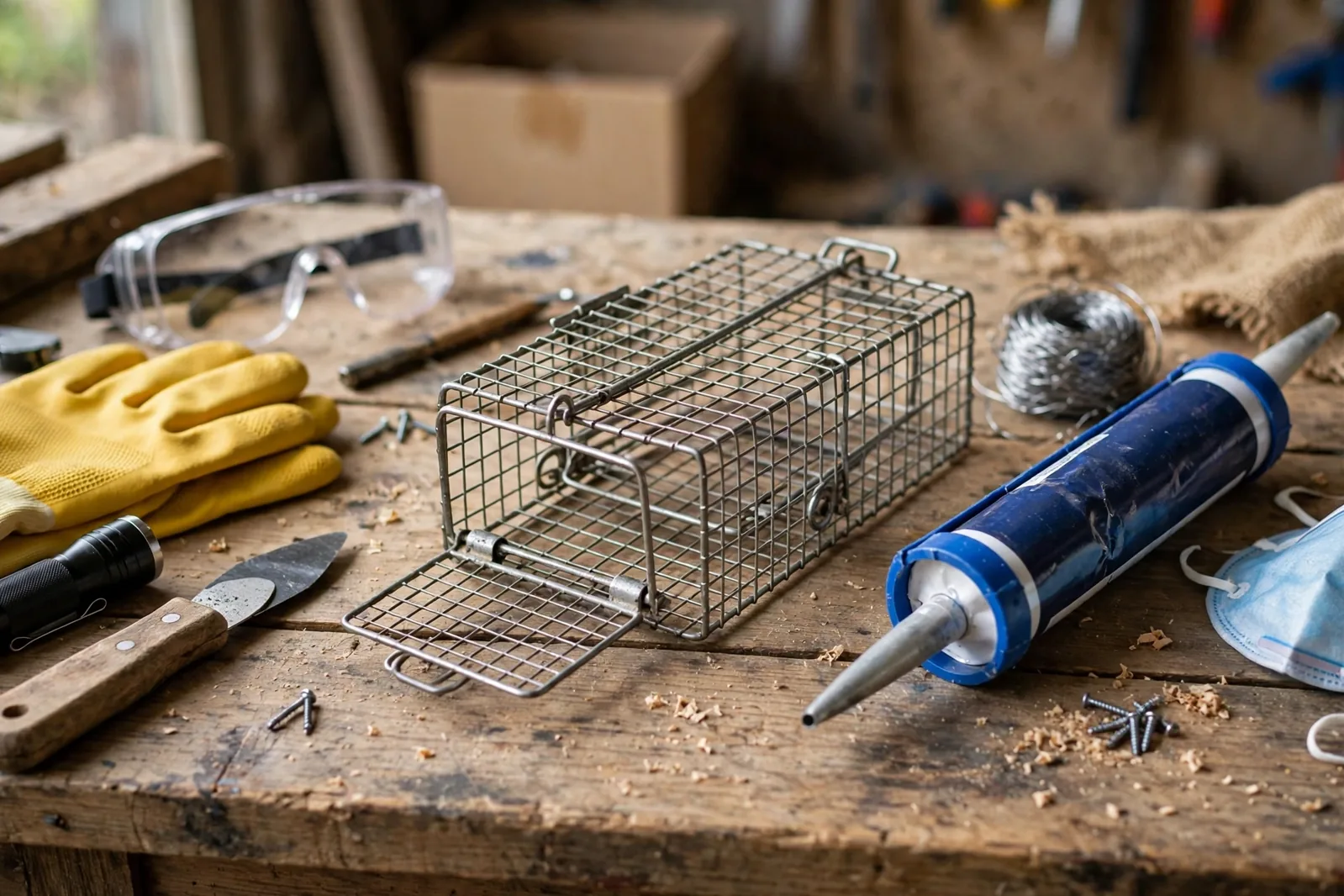
Removal and exclusion solve two different halves of a mouse problem. Removal deals with the mice that are already inside your home, using trapping plans fitted to where mice are active. Exclusion deals with the gaps those mice used to get in, sealing them so new mice cannot follow. Neither job replaces the other, and most lasting results need both.
Think of it this way: removal empties the house, and exclusion locks the doors. A home that gets only one of the two usually sees the problem return, because the mice or the gaps are still there.
What removal does well
Removal is the right first step when mice are active. A provider sets traps along mouse runways — baseboards, attic beams, wall voids, kitchen edges — and removes captured mice. Methods include standard trapping and mice extermination approaches, and humane mice removal is available for households that prefer live capture.
Removal works quickly on the mice present, and it tells you something useful: where mice are caught shows where they travel and nest. That information feeds directly into the exclusion plan, because the routes mice use inside usually point to the gaps they used outside.
What exclusion does well
Exclusion is the long-term half. It closes foundation cracks, pipe and wire gaps, vent openings, rooflines, and door gaps with mesh, sealant, and sweeps. Once the gaps are closed, the house stops recruiting new mice every season, which is the difference between a solved problem and a recurring one.
Exclusion also protects the cleanup investment. Rodent attic cleanup and exclusion pair naturally: an attic cleaned but not sealed tends to need cleaning again, because new mice recontaminate it through the same openings.
Why removal alone usually fails
Removing mice without sealing leaves the gaps open. Mice live nearby — in yards, greenbelts, neighboring buildings — and they follow scent trails and routes into the same openings. In Olympia, where the wet, cool months push mice indoors every year, an unsealed home often sees new activity within the same season.
The same logic applies in reverse: sealing while mice are still inside traps them in the house, where they may cause more damage trying to get out or die in wall voids. That is why the order matters — remove first, then seal.
The sequence that works
For most Olympia homes, the sequence is: inspect to map activity and entry points, remove the mice that are present, seal the gaps they used, and clean up droppings and nesting material. Commercial and multi-unit properties follow the same sequence at building scale, covering common areas and shared voids as well.
If you are deciding where to start, start with an inspection. It answers the two questions the whole plan depends on — how many mice, and where they enter — and it keeps you from paying for sealing before removal, or removal without sealing, when the other half is what your home actually needs.
Where cleanup fits in
Removal and exclusion are the two main halves, but cleanup is the third step that completes most jobs. Droppings, nesting material, and odor left behind after removal keep a home feeling infested even when the mice are gone, and attic accumulations can affect the rooms below. Cleanup removes droppings and nesting material, cleans affected surfaces, and prepares the space for sealing.
The order matters here too. Cleanup comes after removal and before or alongside sealing: cleaning while mice are still active means the area gets dirty again, and sealing a dirty attic locks contamination in rather than resolving it. A complete plan for an established problem is therefore remove, clean, and seal — in that order.
Commercial and multi-unit buildings
The removal-versus-exclusion question plays out at larger scale in commercial and multi-unit buildings. A restaurant, office, or apartment building has more entry points, shared walls, and common areas than a house, and mice in one unit or room usually mean mice in the building's shared voids. Treating a single room while the shared spaces are ignored repeats the residential mistake of removal without sealing, just across more square footage.
Building-wide plans handle this by surveying common areas, basements, storage rooms, and trash areas alongside individual units, then sequencing removal, cleanup, and sealing across the whole building. For duplexes and small apartment buildings, that building-wide scope is what makes the result hold, because mice travel through shared walls regardless of which unit was treated.
After the work: what to watch
After removal and sealing, watch the places mice used before: the attic, the kitchen edges, the pantry, and the wall voids where sounds were heard. A few quiet weeks usually mean the plan is holding, while fresh droppings or new sounds in the same spots mean a gap was missed or a new one has opened, and the provider should hear about it.
Renovations and repairs can reopen sealed points, so recheck sealed gaps after roofing, plumbing, or siding work, and after any job that opens a wall or moves a vent. New gaps are normal as a house settles and ages, and catching them early keeps a solved problem from becoming a repeat one. If activity returns, describe where and when it appeared — that detail points straight to the route mice are using now.
A real sequence: what a complete job looks like
A complete job follows a sequence, and each step feeds the next. Inspection comes first, mapping where mice are active and every gap they use. Removal follows, with traps placed along the runways the inspection found and checked until activity stops. Cleanup comes next, removing droppings and nesting material from the attic, kitchen, and other affected areas so the house no longer carries the evidence — or the smell — of the infestation. Sealing follows cleanup, closing the gaps the inspection mapped, and a final check watches the places mice used before for fresh signs.
Skipping a step weakens the ones around it. Removal without inspection traps blindly, missing the routes mice actually use. Cleanup before removal dirties the area again. Sealing before removal traps mice inside, where they may cause more damage or die in wall voids. And a job without a final check can miss a gap that reopened during the work itself. The sequence is not bureaucracy — it is the order that makes each step effective, and providers who follow it tend to solve problems once rather than revisit them.
When exclusion comes first, and when it should not
There is one situation where exclusion comes first: when an inspection finds no active mice. A home with gaps but no current activity — a new purchase, a seasonal property, or a house whose previous problem was already removed — can be sealed as prevention, closing routes before the next fall migration. In that case there is nothing to trap inside, so sealing first is simply good timing.
Exclusion should not come first when mice are active. Sealing an occupied house traps mice inside, where they gnaw new routes, damage wiring and insulation trying to escape, or die in wall voids and create a dead-rodent problem on top of the live one. The rule is simple: if mice are present, remove first and seal second; if the house is clear, seal now and watch. An inspection is what tells you which situation you are in, which is why it precedes both.
Related services and areas
Related services: Mice Removal, Mice Exclusion & Sealing. Also see mice control in West Olympia and mice control in Olympia, WA.